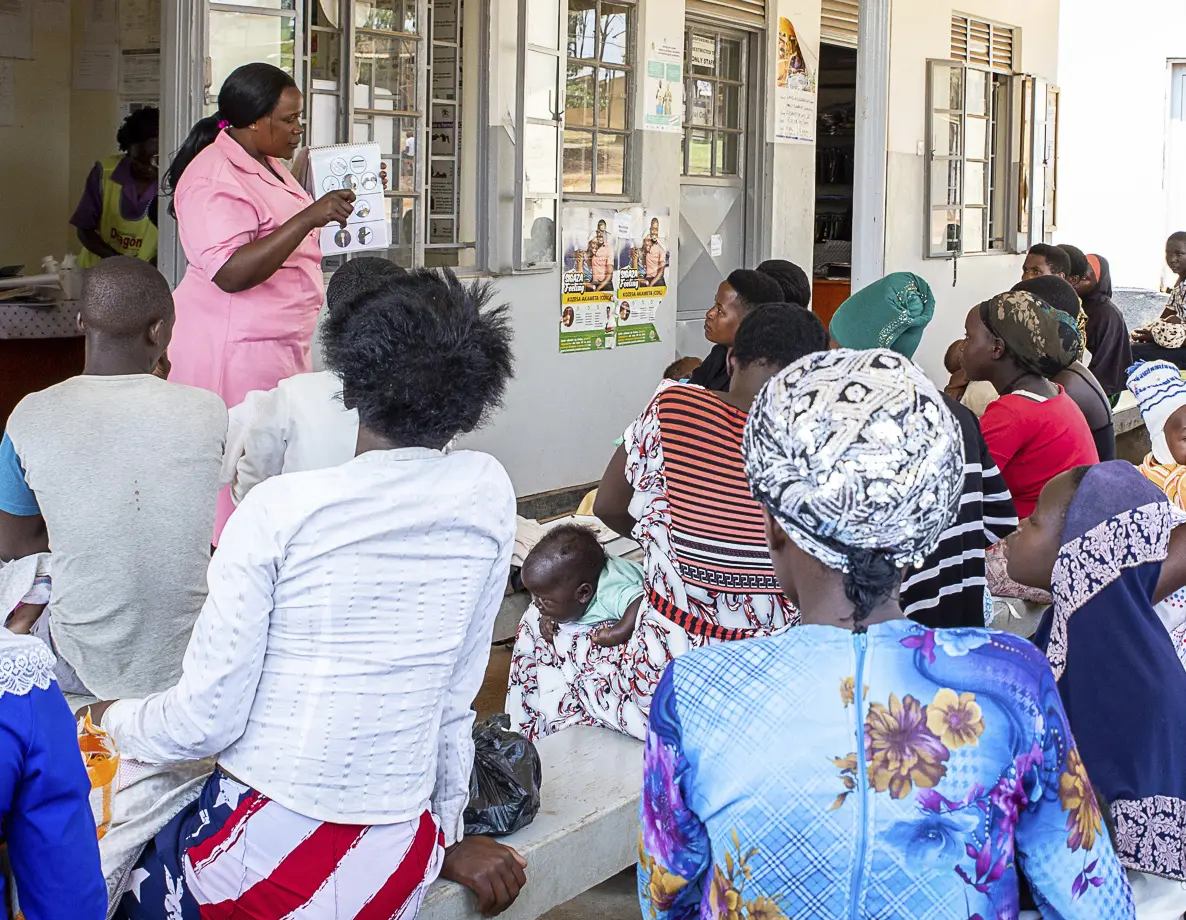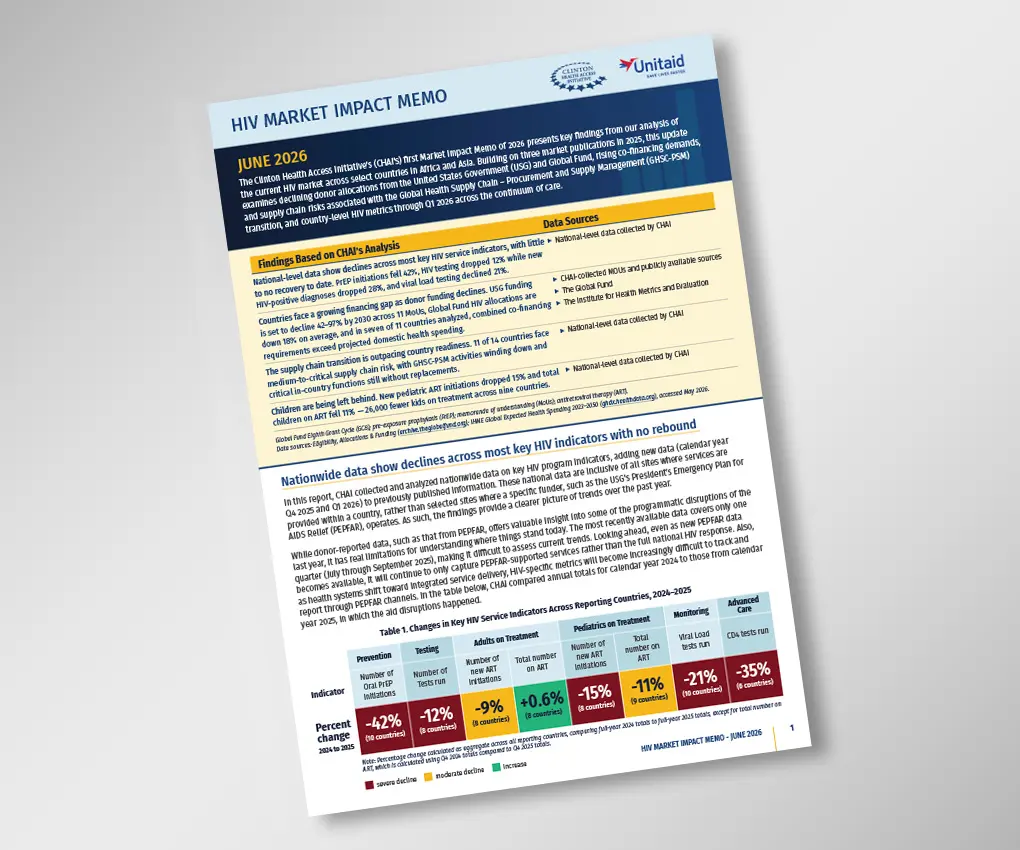
A year after global HIV funding was upended, the damage is still mounting. New nationwide data collected by CHAI across countries in sub-Saharan Africa and Asia tracks what happened to HIV services in 2025 and into early 2026 against the year before — and shows that services have not recovered. People are not getting tested. Children are not getting treatment. Prevention is collapsing at the moment a breakthrough drug is finally within reach.
A funding gap with no clear bridge
The US government and the Global Fund together paid for roughly 86 percent of all international HIV funding in 2024. Both are now cutting their contributions at the same time. US funding agreements with 11 countries project declines of 42 to 97 percent by 2030. Global Fund HIV allocations across 13 countries are down an average of 18 percent. Both donors are simultaneously requiring governments to contribute more, at a scale most domestic health budgets are not projected to reach.
Donor funding for supply chains is winding down faster than countries can respond
The supply chain that moves medicines to clients faces the same pressure. The main US-funded logistics operation, covering warehousing, distribution, and the data systems that track whether drugs are reaching health facilities, is winding down, with most countries losing that support by September 2026. Commodity procurement has already shifted to a Global Fund platform, but the harder-to-replace in-country functions have no clear alternative.
Children and the sickest clients are bearing the greatest burden
Children are being hit hardest. Twenty-six thousand fewer children were on HIV treatment by end of 2025 than the year before, driven by cuts to community health workers, test kit shortages, and the collapse of specialized pediatric services. People with the most advanced disease are also losing access. CD4 testing fell 35 percent, and in some countries more than 80 percent.
Progress is possible — but the window is narrow
There are reasons to keep pushing. Adults on treatment held roughly stable. A pricing agreement negotiated by CHAI, Unitaid, Wits RHI, and Dr. Reddy’s — alongside a parallel Gates Foundation deal with Hetero — has brought injectable lenacapavir to $40 per person per year. Twenty thousand people have already started on it. That matters. But with oral PrEP down 42 percent, the infrastructure to reach people with any prevention is eroding faster than new tools can fill the gap.
The data in this memo documents a crisis that is still deepening. The countries most affected are making consequential decisions right now: about which services to cut, which populations to prioritize, and how to sustain care with fewer resources. Those decisions will shape the HIV response for years. They deserve to be made with the clearest possible picture of what is at stake.
Published in partnership with Unitaid.