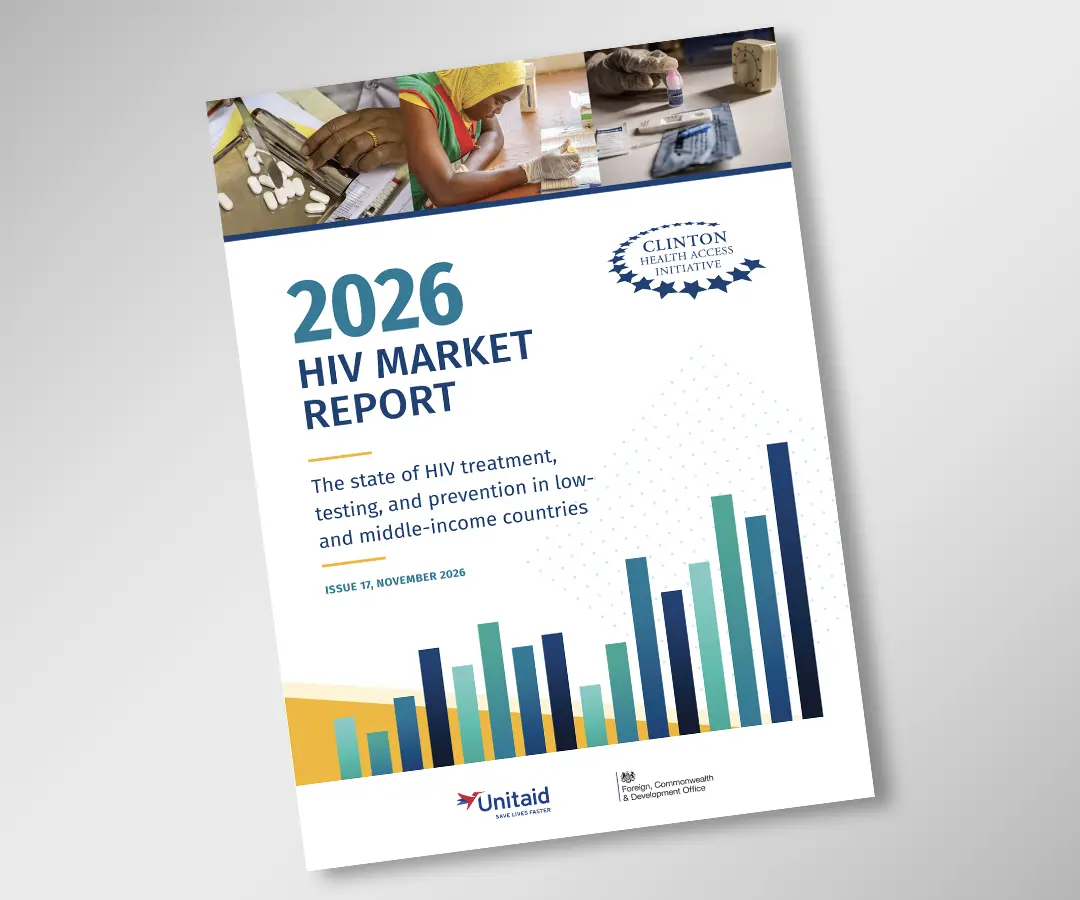
Since funding cuts to global aid upended HIV programs in early 2025, CHAI has tracked their impact through periodic market impact memos and our annual report. The 2026 HIV Market Report, our 17th annual edition, draws on national program data from up to ten countries through June 2026. It is the first edition since the cuts to show real signs of recovery.
What the 2026 HIV Market Report finds
The report offers a measured look at the market, acknowledging both where we are hopeful and where serious concerns remain. It builds on our recent HIV market impact memo, which found little recovery a year into the funding crisis.
Prevention bounced back. In 2025, HIV prevention was in free fall. But between April and June 2026, PrEP starts across nine countries rose 76 percent from the 2025 quarterly average to 365,600, which is 4 percent above 2024 levels. The rise reflects all PrEP methods, but lenacapavir, a twice-yearly injection, is reaching people who had never used PrEP. About 175,000 people have started it, and in the countries tracked, 60 to 90 percent of starts are among people new to PrEP. The first generic LEN has just won FDA tentative approval at US$40 a year, so long-acting PrEP could soon reach millions more people. But the delivery system and funding to match are not yet in place.
Children are still being left behind. In 2025, children living with HIV were hit hardest by the aid cuts, and the new data shows no rebound. In nine countries, about 44,000 fewer children were on treatment in Q2 2026 than in 2024, a 17 percent drop, and the number is still falling. The likely cause is the loss of community workers who tracked children who missed appointments, along with pediatric services closing. Without treatment, half of children living with HIV die before their second birthday. But this can be turned around. In Lesotho, where community services kept their funding, testing and early infant diagnosis improved.
New US funding agreements leave governments with little visibility. International HIV funding for low- and middle-income countries fell 18 percent in 2025 to US$7.3 billion, the lowest since 2007. CHAI analysis of the US bilateral agreements shows governments have little visibility into when funding will arrive. Only 41 percent of US commitments within the agreements are tied to costed funding areas. Although most agreements were due to start in April, five of seven countries assessed still had no funds released by October. Most agreements (14 of 17) also allow the US to reduce or cut funding if targets aren’t met.
Recovery brings reasons for optimism, but progress is uneven. Most services are up from last year. PrEP and the number of adults on treatment are back at or above 2024 levels. HIV, viral load, and CD4 testing are rising but remain below 2024, and new adult starts are 20 percent below, so growth may stall. Recovering from a deep fall is not the same as being back on track.
About this report
The 2026 HIV Market Report is the 17th edition of CHAI’s annual report on HIV treatment, testing, and prevention in low- and middle-income countries. It was made possible through the generous support of Unitaid and the UK Foreign, Commonwealth & Development Office. Data were reported during a period of funding disruption and may be incomplete or revised.
Key topics covered: HIV prevention, lenacapavir, long-acting PrEP, HIV testing, pediatric HIV, adult treatment, advanced HIV disease, HIV financing, supply chain.