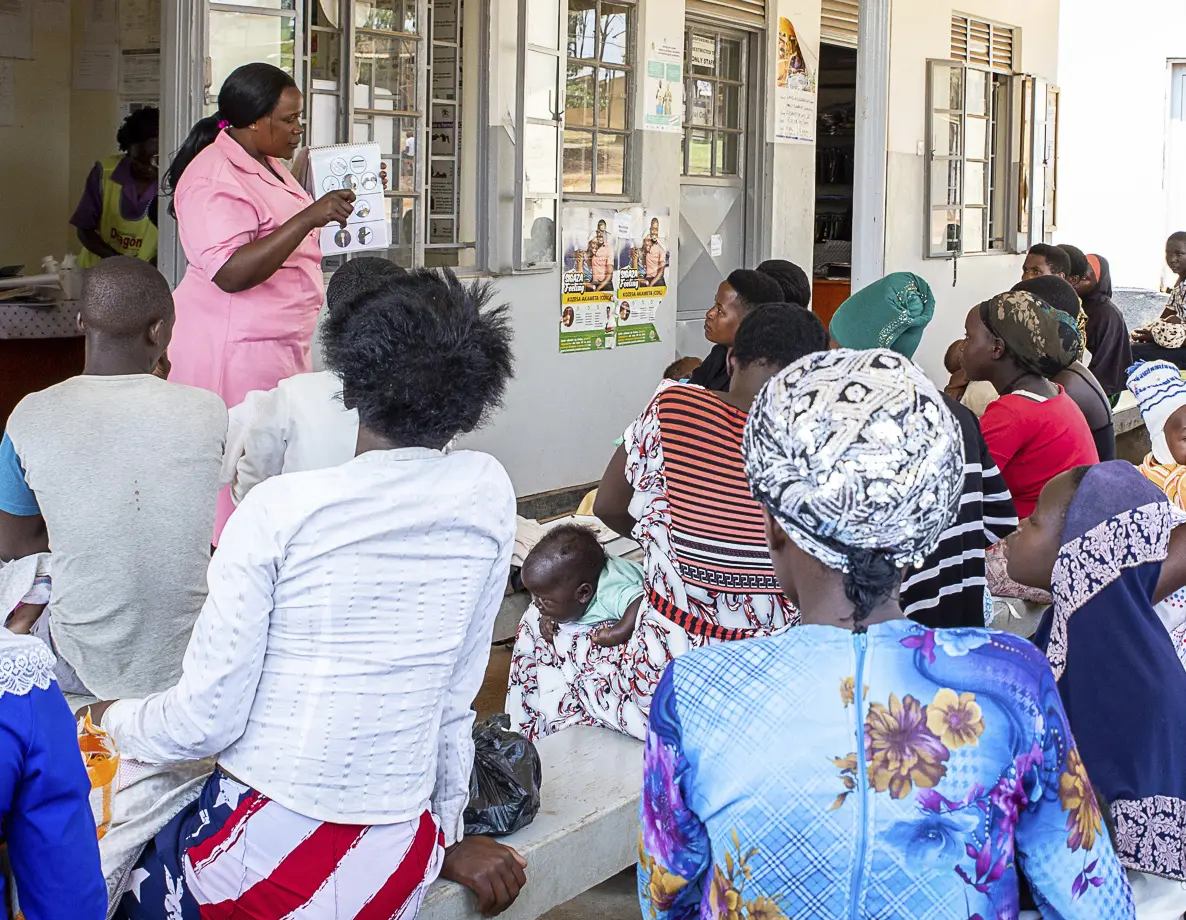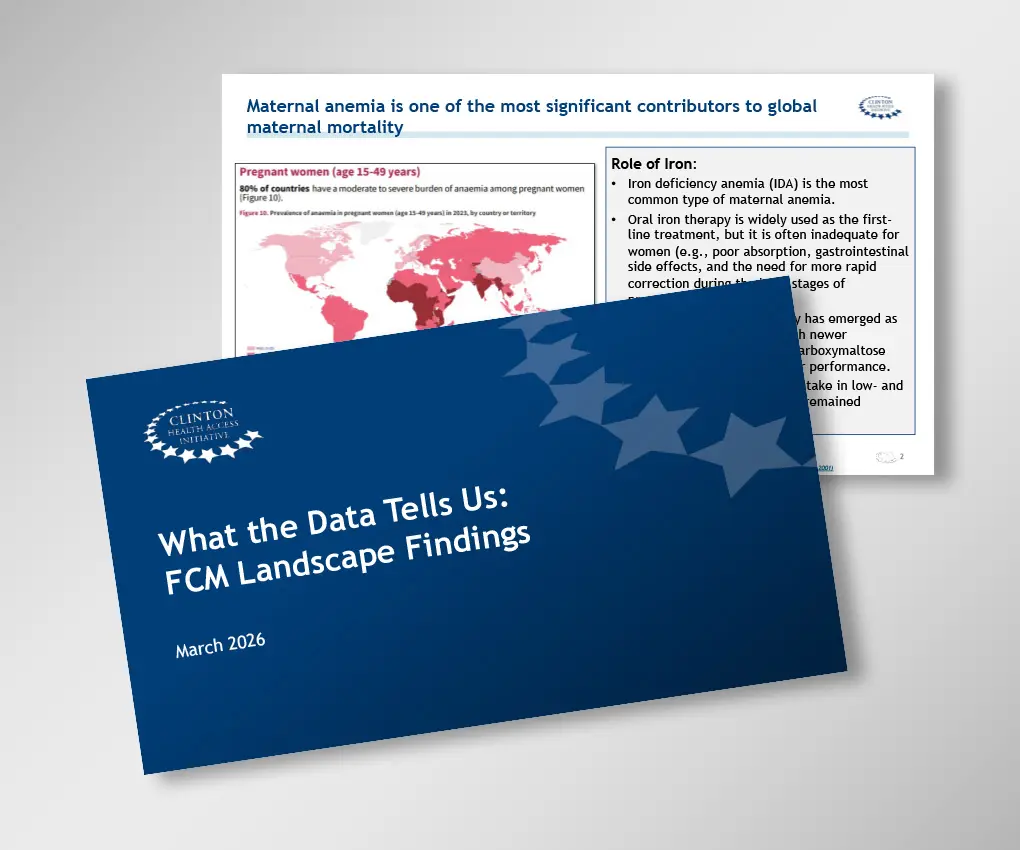
Ferric carboxymaltose (FCM) is a highly effective treatment for iron deficiency anemia in pregnancy—a single IV infusion that corrects iron levels faster and more reliably than weeks of daily tablets. Anemia affects nearly 40 percent of pregnant women globally. Anemia is a leading contributor to maternal death, hemorrhage, and preterm birth. Yet in most low- and middle-income countries, FCM remains out of reach. Most women who need it cannot access it.
To understand why, CHAI conducted a rapid landscape assessment across 15 countries in sub-Saharan Africa and Asia, funded by the Gates Foundation. The report maps current FCM availability, country readiness to introduce and scale the treatment, barriers across the market pathway, and projected demand through 2031.
Key findings include:
- Only 5 of 15 countries have FCM in their maternal anemia guidelines
- Where available, FCM is almost exclusively in the private sector
- End-user prices vary widely—from $10 to $70 per dose—signaling a fragmented market
- Projected demand by 2031 will still fall short of clinical need today
The report is designed for ministries of health, donors, manufacturers, and implementing partners working to expand access to effective maternal anemia treatment. It includes country-specific analyses, demand forecasts, and a framework for the pre-introduction, scale-up, and market shaping steps.
The landscape findings are already shaping SUPREME, Unitaid’s $52.5M initiative implemented by CHAI’s SECURE consortium and Amref’s LIFELINES. SUPREME supports FCM introduction and anemia diagnostics work across six countries.
To learn more or discuss these findings in detail, please reach out to Gita Ramamurti (gramamurti@clintonhealthaccess.org) or Musleehat Usman (musman@clintonhealthaccess.org).