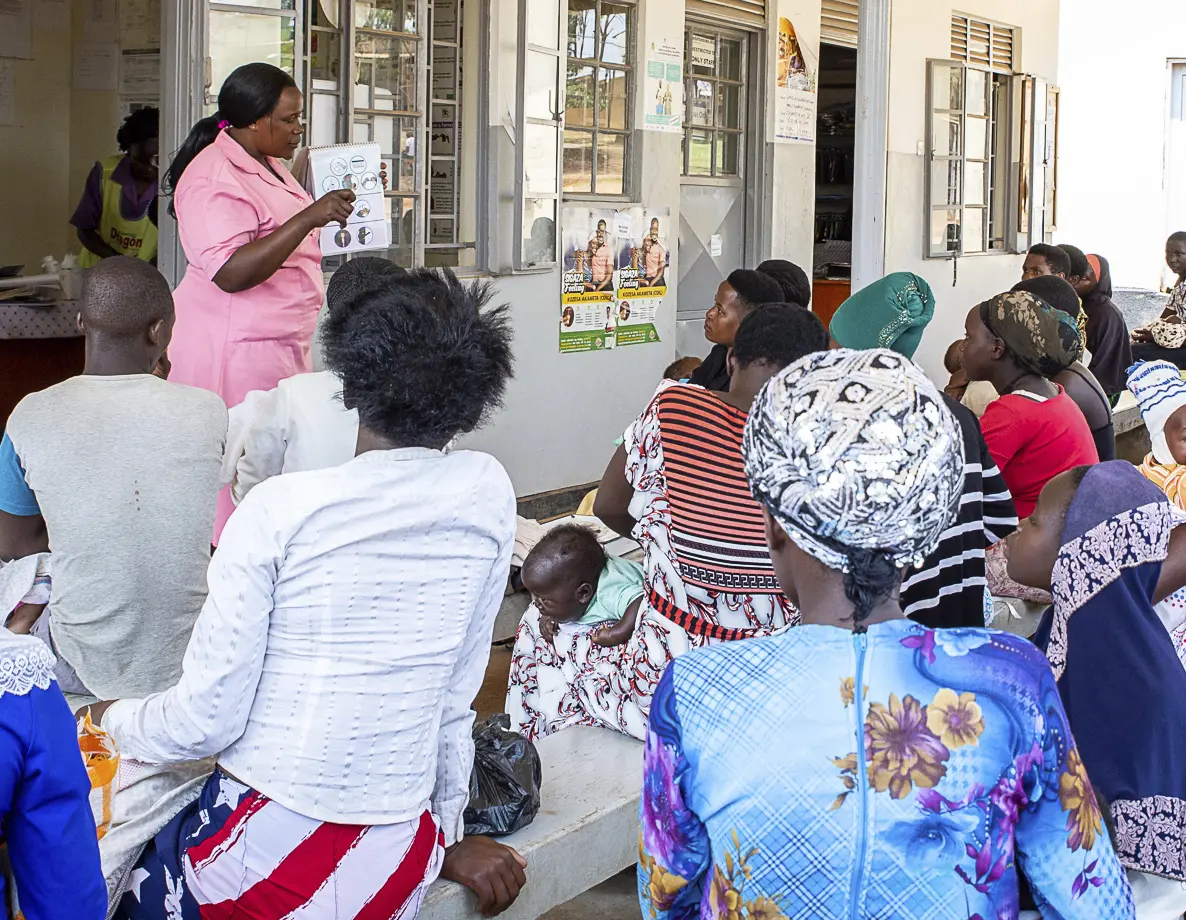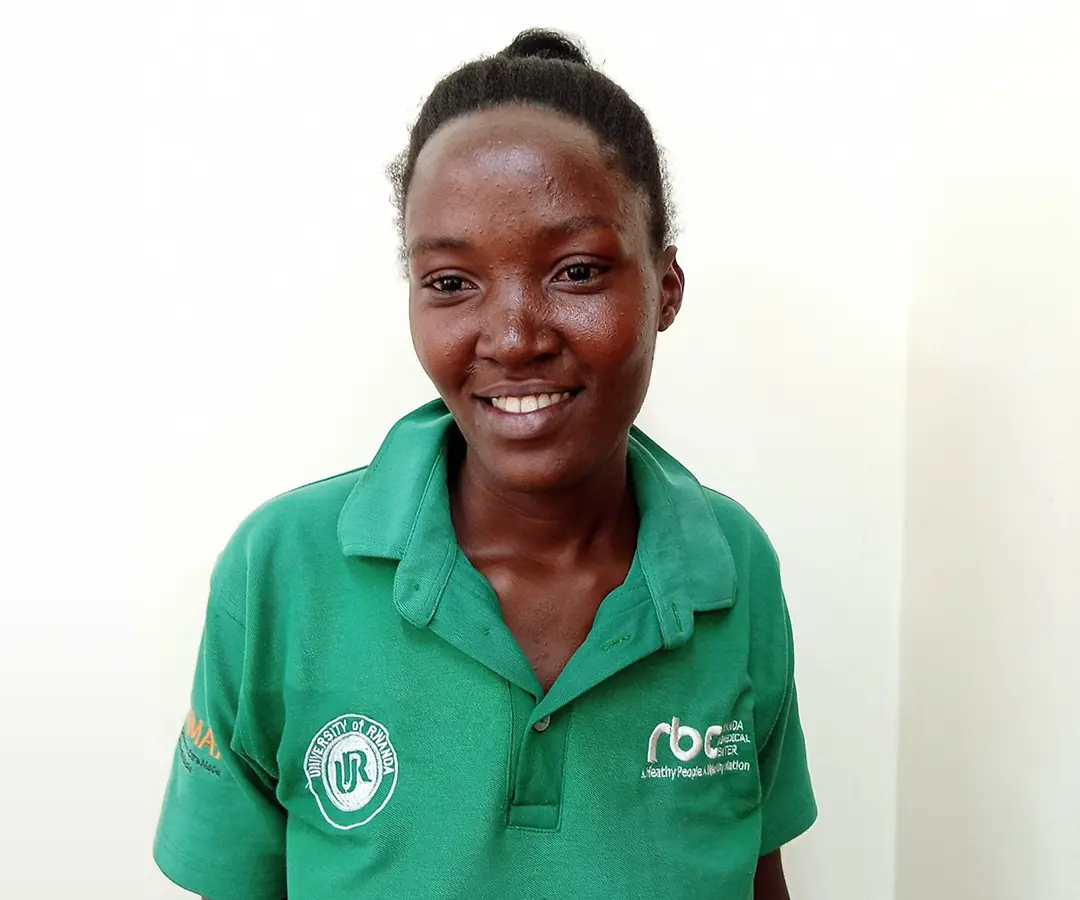
Jovia Musabyimana, a volunteer community health worker in Nyagatare, a district in eastern Rwanda.
In Rwanda’s largest district, volunteer health workers brought cervical cancer screening to women’s homes, and the share of women screened went from 18 percent to 70 percent in three months. Of the women found with precancer, 96 percent were treated. And less than a year later, 13 of the country’s 30 districts have hit key milestones, bringing the country closer to its goal of eliminating cervical cancer.
The first time Jovia Musabyimana offered her neighbor a cervical cancer screening kit, the woman said no.
Jovia is a volunteer community health worker in Nyagatare, a district in eastern Rwanda, and the neighbor was a mother of three. She was afraid. The test would hurt, she thought. It would stop her from having more children.
Jovia knew her well. They were close in age and had known each other for almost a decade. After becoming a community health worker, Jovia had even followed her through her last pregnancy.
Jovia came back the next day. The answer was the same.
On her third visit, Jovia reminded her of the rumor that went around when they got the HPV vaccine, back when they were 12.
“People said we wouldn’t be able to have children,” Jovia told her. “But we have had children.”
By then, other neighbors had been screened. Soon after, the woman came to Jovia and asked for a kit. Her results arrived by text message: come back in five years. She told Jovia she would.
A day’s journey to a clinic
Jovia is one of 2,329 community health workers who carried HPV self-sampling kits door to door across Nyagatare between February and April 2026, in a campaign to reach women who lived too far from a health facility to access screening.
The Rwanda Biomedical Centre (RBC) led the campaign, with funding from Unitaid. CHAI supported RBC with technical and implementation help, including planning and coordinating the campaign, delivering screening through community health workers, and monitoring results.
That distance mattered because of a global goal. The World Health Organization (WHO) has set three targets for 2030 to put countries on the path to eliminating cervical cancer: 90 percent of girls vaccinated against HPV by age 15; 70 percent of women screened twice, once by age 35 and again by 45; and 90 percent of women with cervical disease treated.
In under three months, the health workers reached more than 45,000 women. Before the campaign, only 18 percent of women aged 30 to 49 in the district had ever been screened. Now, 70 percent have. 96 percent of women found to have precancerous lesions were treated, most in the same visit as they were diagnosed.
Nyagatare had already vaccinated 97 percent of girls against HPV. With the campaigns results, the district has now met all three WHO targets.
Jovia is 27. She farms, teaches at an early childhood center, and serves on her village women’s council in Gasongera. As a volunteer, she looks after 105 households, traveling to each on foot, which is hardest when it rains.
Nyagatare is Rwanda’s largest district, a vast, semi-arid stretch reaching to the Ugandan border, with 14 sectors and hundreds of villages, many far from health facilities. For women who live here, including farmers, herders, and mothers, reaching a clinic could take a full day of travel.
Cervical cancer is largely preventable, yet the International Agency for Research on Cancer (IARC) estimated 1,582 new cases and 965 deaths from cervical cancer in Rwanda in 2024 alone. That means roughly six in ten women diagnosed with the disease die from it.
Bringing the test to the woman
Clinics remain essential locations to offer screening, but they weren’t reaching women in these more remote areas of the country. So, the campaign brough the screening to them.
Trained community health workers like Jovia visited women at home. They explained what cervical cancer is and who is at risk, then gave each eligible woman a self-collection kit for HPV, the virus that causes nearly all cervical cancers. Women collected their own samples, privately, at home. The health workers took the samples to the nearest health center, which sent them to one of five laboratories that could do testing. Within days results arrived by text message on each woman’s phone. Women who tested positive for high-risk HPV were encouraged to go to a health facility for triage and treatment.
At the facility, eligible women could be treated with thermal ablation, a procedure that uses heat to destroy precancerous cells. Other women were referred to hospital.
From one district to many
At the time of publication, 13 of Rwanda’s 30 districts have reached the WHO targets for screening and treatment. The Rwanda Biomedical Centre is extending the model to more districts as part of a national scaleup, with the aim of reaching those targets nationwide. The effort is part of Rwanda’s national elimination program, Mission 2027.
The next step is moving from campaigns to routine services that combine clinic-based screening with community self-sampling, so that high coverage lasts.