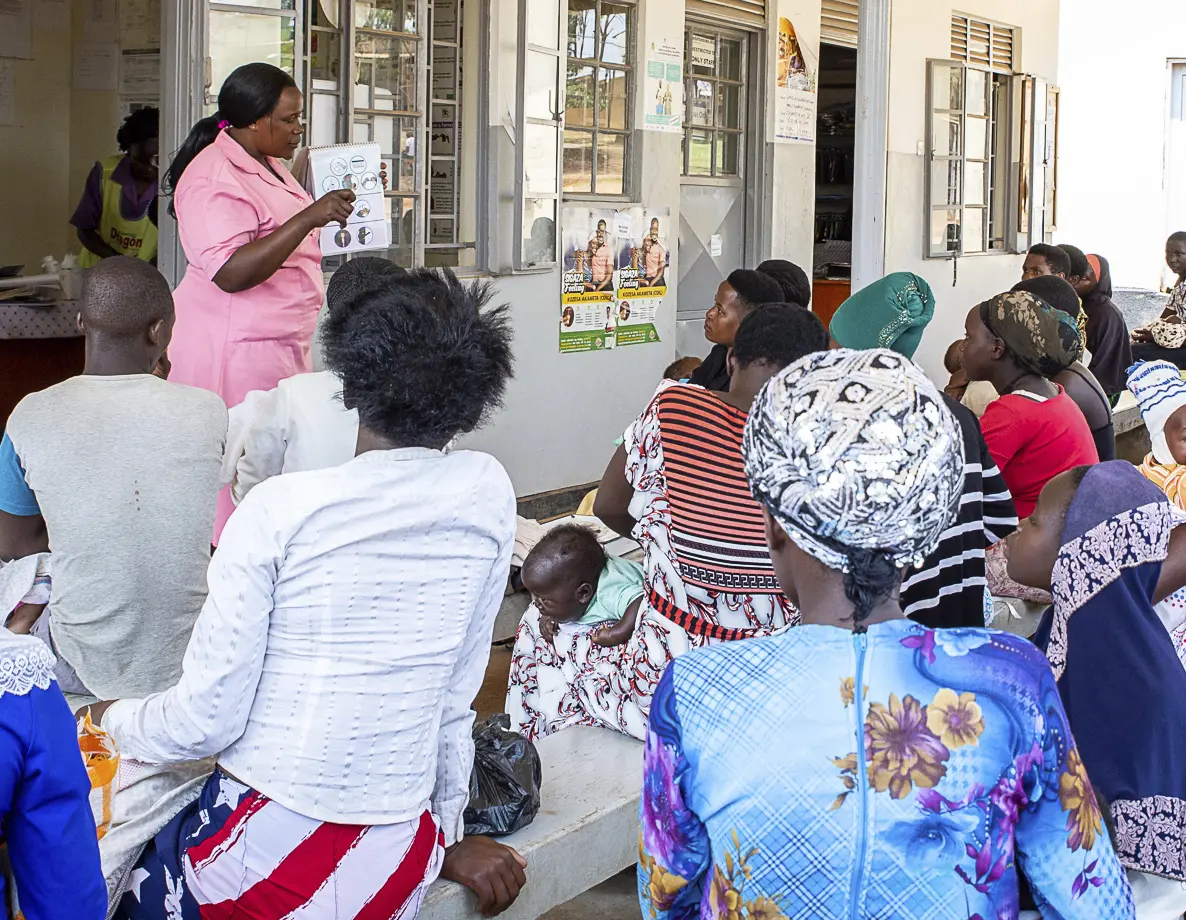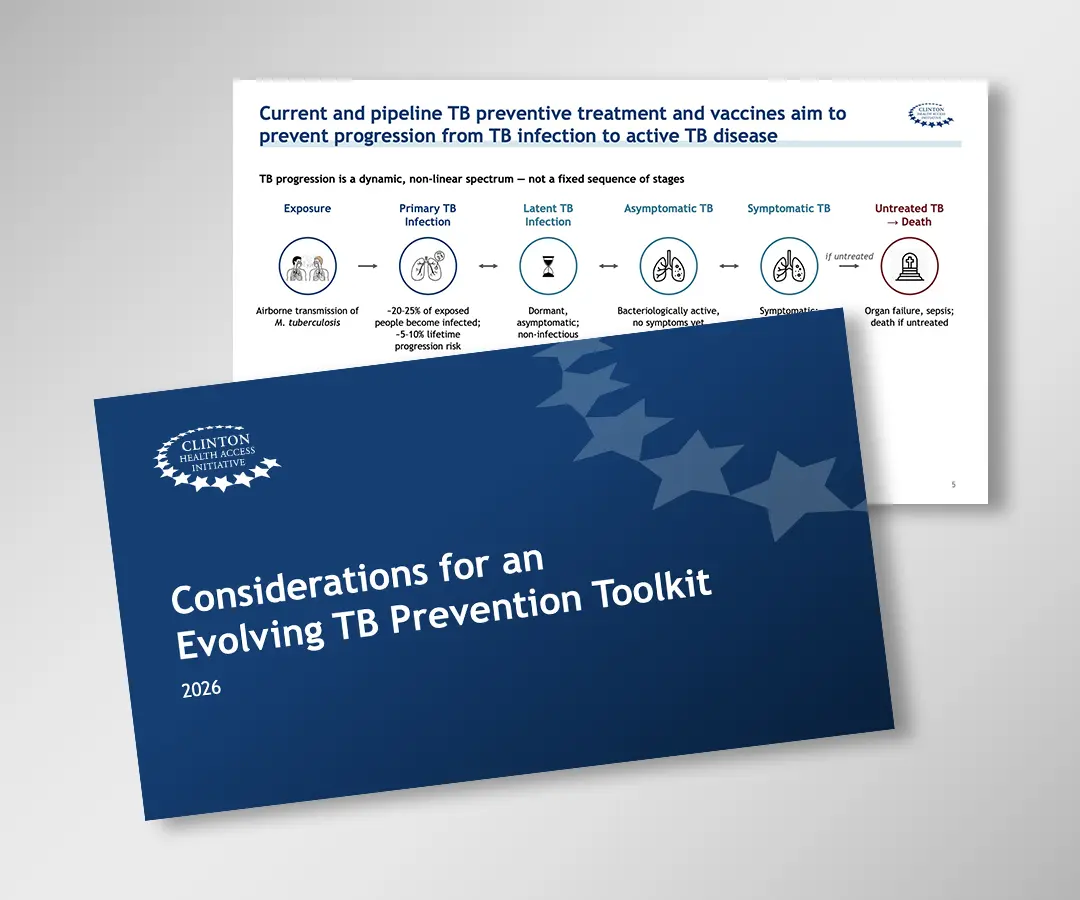
Countries are making decisions about tuberculosis (TB) prevention today for a landscape that is about to change. Several new tools, including vaccines targeting adolescents and adults, could reach low- and middle-income countries within the next five years if approved. CHAI’s new resource, Considerations for an Evolving TB Prevention Toolkit, brings existing and pipeline options together side by side, with their timelines, characteristics, and target populations, so stakeholders can see how they might fit together in a TB prevention portfolio.
Why TB prevention matters
TB remains the leading cause of death from a single infectious agent. In 2024, it caused an estimated 10.7 million cases and 1.2 million deaths. More than 85 percent of people who develop TB disease live in just 30 countries, many of them low- and middle-income.
Today, there are few pharmaceutical prevention options for TB. The Bacille Calmette-Guérin (BCG) vaccine protects infants and young children, but protection wanes after about age five. For everyone else, TB preventive treatment (TPT) is the main option. TPT stops TB infection from progressing to disease and is used for people at highest risk, such as those living with HIV or close contacts of people with TB disease.
Shorter TPT courses have improved adherence, though longer courses remain difficult for many people to complete. And neither provides lasting protection: once treatment ends, someone who is exposed to TB again can be reinfected.
New TB prevention tools in the pipeline
Several new tools are in clinical trials. Some could reach low- and middle-income countries as early as 2028 if approved:
- Long-acting injectables: a single-dose injection that could extend protection and ease the burden of taking pills.
- Ultra-short-course TPT: shorter oral regimens that improve adherence, including for drug-resistant TB.
- Novel TB vaccines: vaccines for adolescents and adults, whose protection from BCG has faded.
What’s in the toolkit
As new products are licensed, countries will need to decide where each fits in their TB prevention portfolios. These decisions affect policy, programming, and financing.
To build the toolkit, CHAI drew on World Health Organization (WHO) guidelines, target product profiles, and clinical trial resources. The toolkit sets existing and pipeline options side by side, including their characteristics, target populations, and expected timelines. It also outlines the factors likely to shape adoption, and the open questions stakeholders will need to weigh. It does not recommend specific interventions or use cases.
Download the toolkit to explore the emerging TB prevention landscape.