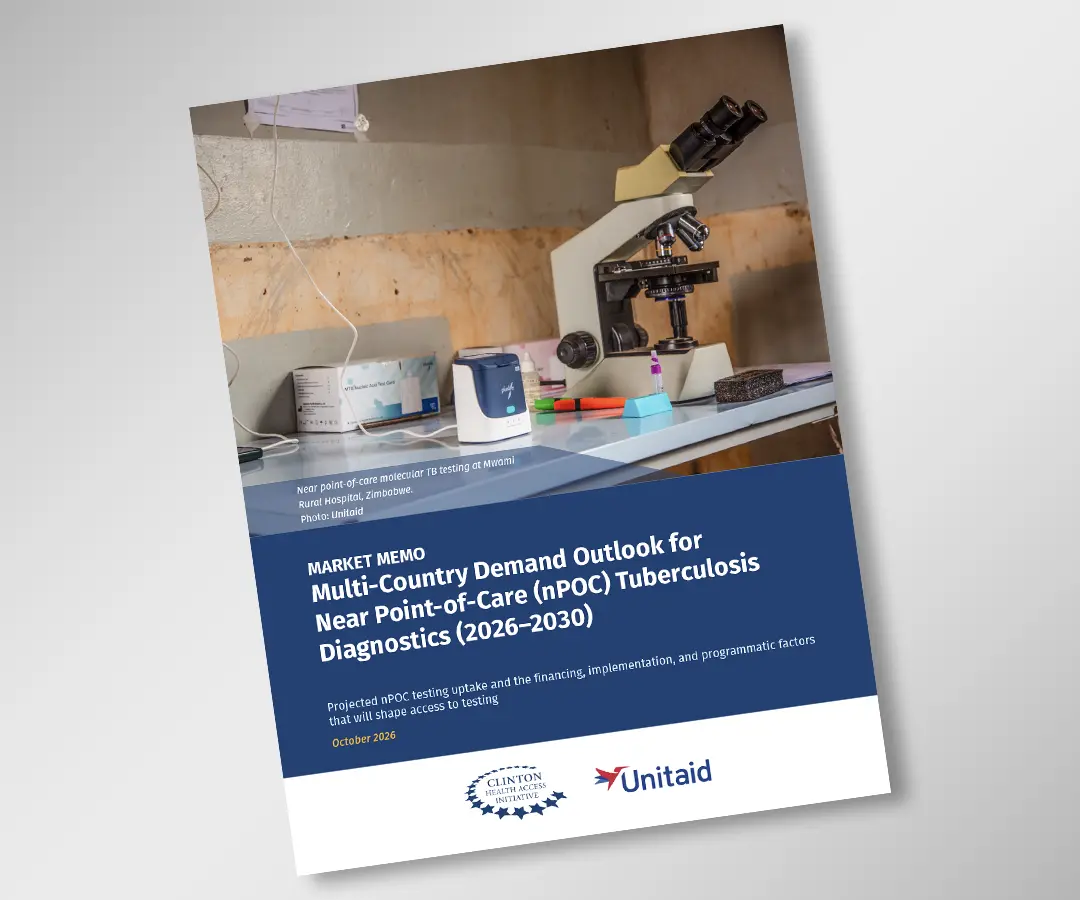
CHAI has released a new market memo on near point-of-care TB tests. Cheaper tests are here. They could bring diagnosis closer to patients and expand testing beyond current levels.
This memo models demand through 2030. It draws on country data and stakeholder interviews across 10 high-burden countries: Cameroon, Cote d’Ivoire, India, Indonesia, Kenya, Nigeria, South Africa, Uganda, Vietnam, and Zimbabwe. It finds that demand is expected to grow substantially. But most of that growth would be test switching from older methods, not new testing. On its own, the switch would not mean more people tested. Still, where the tests reach primary health centers, even a switch brings molecular diagnosis closer to where patients first seek care.
Key findings across 10 countries
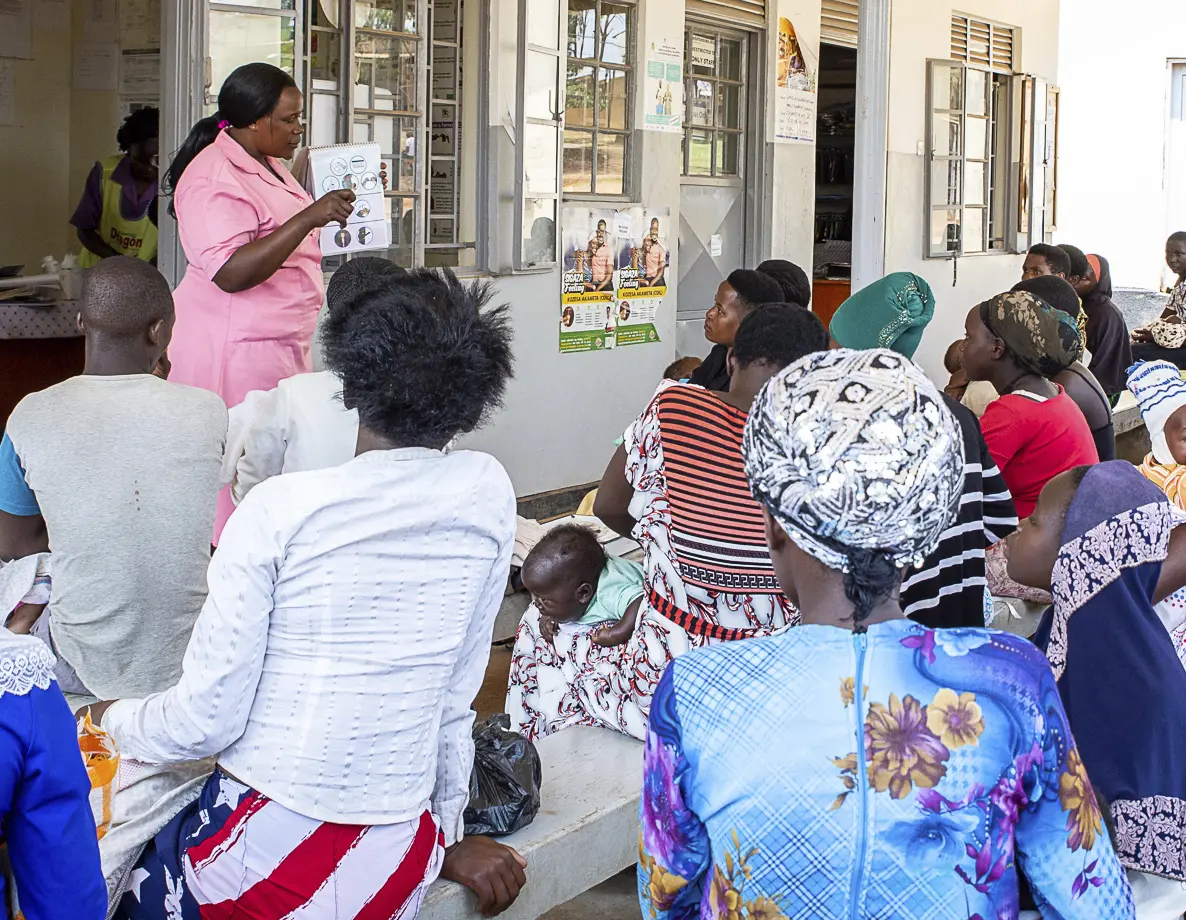
Where tests are placed determines who benefits. At existing molecular testing sites, near point-of-care tests can reduce commodity costs. At microscopy sites, they improve diagnostic quality, although commodity costs rise. At clinics that usually send samples elsewhere, near point-of-care tests can be run on the spot, so patients get results in about 30 minutes instead of waiting days.
Buying tests is not enough. A clinic that has a near point-of-care test also needs trained staff, reliable power, a steady supply of tests, and a way to record results and check quality. Without them, the device sits unused. Current tests also can’t tell whether the TB is resistant to rifampicin, a key TB drug, so positive samples still need to be sent on for resistance testing. These costs need funding from the start.
Lower prices create an opportunity to fund more testing. A near point-of-care test costs about US$2.60, compared with about US$8 for the molecular test it often replaces. If countries keep their testing budgets the same and put the savings into more tests, they could run about 17 million more tests a year by 2030. Where tests replace microscopy, diagnosis becomes more accurate, but each test costs more. This is a modeled opportunity, not a plan. Realizing it will take countries and funders working together to keep the savings in the testing budget and spend them on more tests, alongside funding the services that let clinics use the tests.
Looking forward
Cheaper TB tests, closer to patients. Turning that opportunity into more people tested will take action from everyone involved.
Countries should decide where the tests will do the most good. Donors should fund the staff, supplies, and sample transport that keep testing going, and make that funding predictable. Manufacturers should make delivery and repair work for small, remote clinics. Partners and communities should help shape these decisions from the start.
Whether the tests reach more people depends on what countries, funders, and partners do next.