Annual Report 2025
Annual Report 2025
Proof that progress is still possible
2025 was one of the hardest years global health has faced in a generation. Foreign aid fell by 23 percent, the largest annual decline ever recorded, and governments were suddenly being asked to do more with much less.
But it was not only a year of retrenchment. CHAI spent 2025 protecting essential services and helping governments make difficult decisions, while continuing to push for what could come next. This report offers many reasons for hope.
Our response to foreign aid cuts:
Technical Support Units
We established Technical Support Units (TSUs) in 19 countries, with support from 11 donors, to rapidly respond to government planning needs in 2025.
At the request of several countries, CHAI launched TSUs: groups of advisors to help ministries of health optimize budgets in this new era of shrinking aid.
In Uganda, a detailed review of HIV and lab commodity budgets found US$11.8 million in savings, enough to absorb its budget cut without reducing access to a single essential medicine. Zambia committed US$9 million in domestic financing after CHAI helped build the evidence case.
Billions of dollars are gone from the global health system, and domestic financing alone won’t fill that gap in the short-term. But these examples reflect something we noticed across countries: governments stepping up, making hard decisions, and finding more in their own budgets.
US$70M
in funding was raised or reallocated in 2025 across five initial countries
US$22M
secured in new domestic and donor funding
US$18M
in resources redirected to higher-impact areas
CHAI’s impact
US$40
per person per year for generic lenacapavir, a twice-yearly injection that prevents HIV, down from US$28K
US$1
per sickle cell diagnostic test, the lowest price ever achieved, compared with US$8 for other tests
666K
girls vaccinated against HPV in Liberia’s first-ever catch-up campaign (100% of eligible girls)
90K
stillbirths estimated averted since 2021 through HIV/syphilis testing and treatment in 14 countries
52
total malaria cases in Cambodia, down 84%, with no locally transmitted cases since Sept 2025
58M
people in Ethiopia have reliable oxygen access, in a system that pays for itself
51%
fall in malaria in 19 CHAI-supported districts in Guatemala, versus 122% rise in non-supported districts
99%
of babies born to hepatitis B-positive mothers in Rwanda received a birth-dose vaccine within 24 hours
1M+
people insured across six Nigerian states (up from 281K), with enrollment continuing post-program
Highlights

Generic lenacapavir cuts the price of HIV prevention by more than 99%
Lenacapavir, a nearly 100 percent effective, twice-yearly injection to prevent HIV, could be the breakthrough the world has waited decades for, one that finally puts ending HIV as an epidemic within reach. But at US$28,000 per person per year, the promise of this remarkable preventative would not be realized in low- and middle-income countries, where over 90 percent of new HIV infections occur.
In September 2025, Unitaid, Wits RHI, and CHAI announced a landmark deal with Dr. Reddy’s Laboratories to supply generic lenacapavir injections at just US$40 per person per year. The medicine will be available in 120 low- and middle-income countries by 2027, less than two years after approval in high-income countries.

Ethiopia’s oxygen system now reaches 58M people, nearly half the population
A decade ago, Ethiopia had just three oxygen production facilities for a population of over 100 million. The hub-and-spoke distribution model designates production facilities as central hubs supplying surrounding health centers at regulated, affordable prices. Before the model, facilities like Dilfana Primary Hospital sourced oxygen from Addis Ababa about 250 miles away. Today, it receives oxygen from Arbaminch General Hospital, just three miles down the road.
Ethiopia now has 55 production facilities, with 14 more in the pipeline. About 58 million people now have reliable access to oxygen, nearly half of Ethiopia’s population. Crucially, the system is also paying for itself.

Even as funding falters, two regions close in on malaria elimination
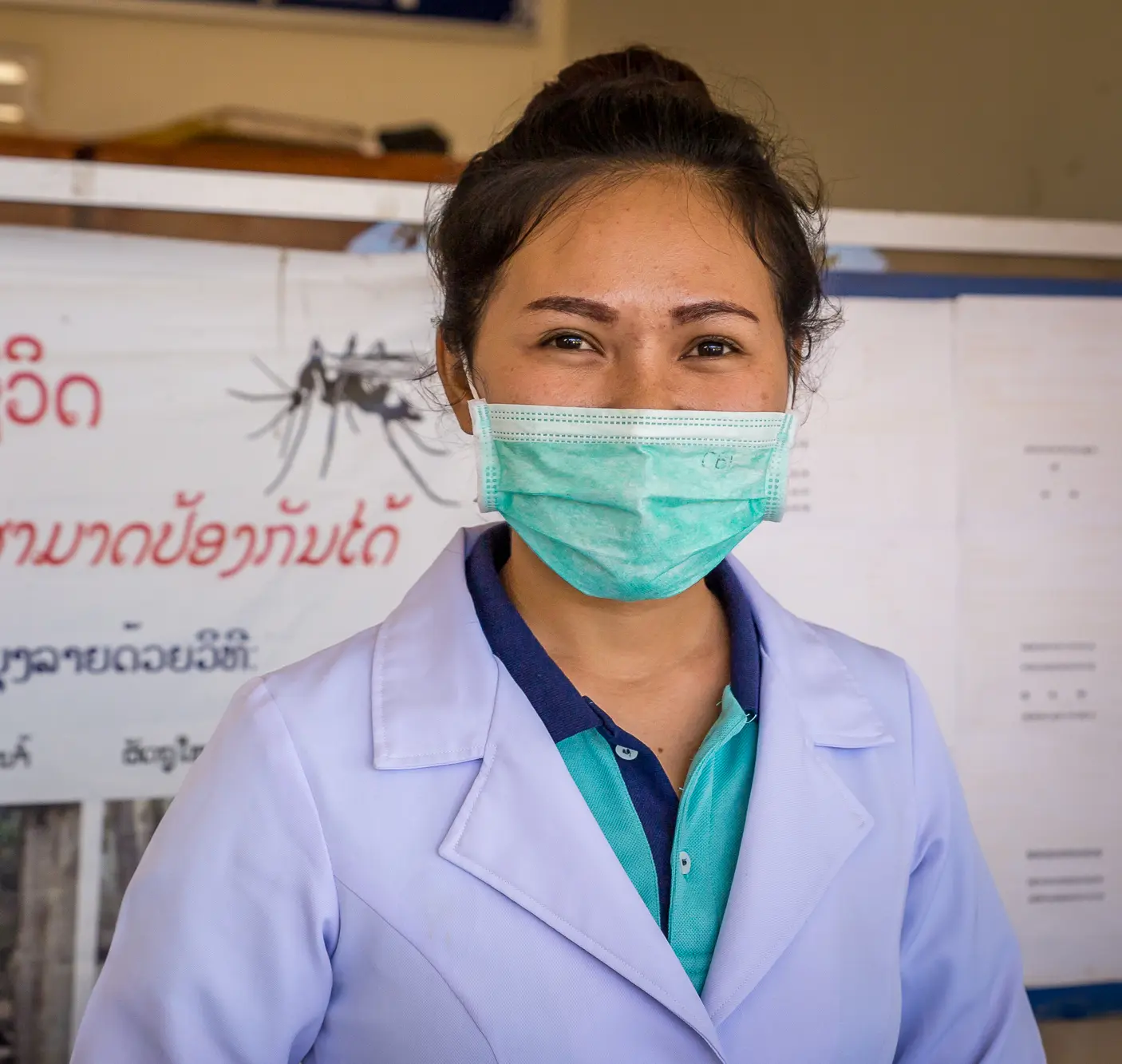
For over a decade, CHAI has partnered with governments to reduce malaria by more than 99 percent in the eastern Greater Mekong Subregion (Cambodia, Lao PDR, and Vietnam) and achieve substantial gains across Central America (Guatemala, Honduras, and Panama). Both regions are close to elimination, but reaching the last cases requires targeted solutions, innovative treatment, and engagement with communities that health systems have historically missed.
In Lao PDR, a nationwide case investigation revealed only four P. falciparum infections across the entire country in 2025, down from 41 in 2024. In Guatemala, 19 CHAI-supported districts collectively recorded a 51 percent case reduction, and Escuintla achieved another record-low year with just 67 cases.

AI for Health: rethinking how health systems work
In many of the countries, there simply aren’t enough doctors, nurses, and specialists to meet people’s needs. AI could address that constraint in a fundamentally new way: not simply adding technology to existing health systems but rethinking how those systems are designed.
That is the premise behind CHAI’s new AI for Health program, launched in November 2025. It builds on a foundation already in place: CHAI’s market shaping work on AI-assisted screening tools for tuberculosis and cervical cancer. The new program brings these and other efforts together under a unified strategy to strengthen clinical care through AI-powered clinical decision support tools and diagnostics, while improving health systems management through the establishment of national health intelligence centers that use AI to turn health system data into better government planning, surveillance, and performance.
Browse the Report
Infectious Diseases
Non-communicable Diseases
Women's and Children's Health
Health Systems


Download the
2025 Annual Report
Foreign aid fell by 23 percent in 2025, the largest annual decline ever recorded. Read how CHAI worked with governments to protect essential services and keep pushing for what comes next.