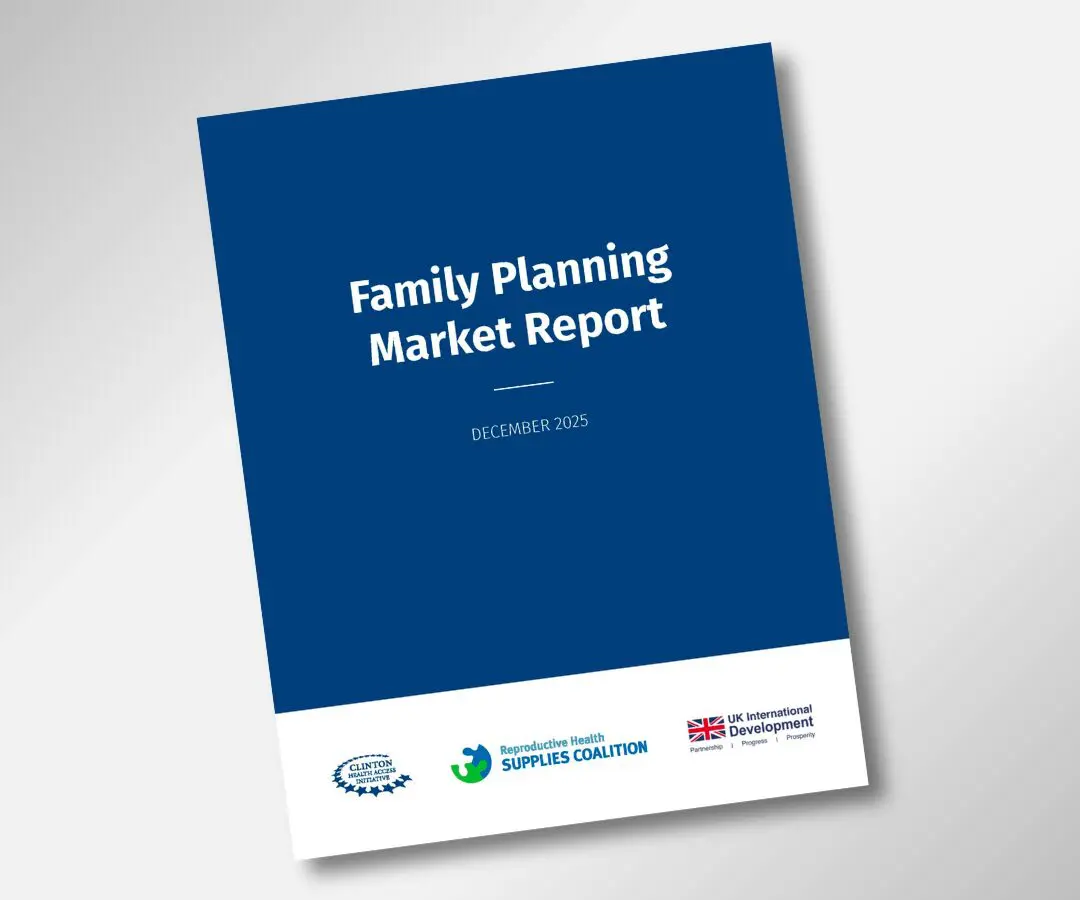
The 2025 Family Planning Market Report presents an analysis of public-sector contraceptive procurement trends from 2020–2024, complemented by qualitative insights on the 2025 funding outlook following the dismantling of USAID and the anticipated impact of these broader funding shifts. This year’s report serves as a critical reference point for understanding the state of the family planning market immediately prior to these significant changes.
Developed in close collaboration with 18 suppliers and numerous global and country-level partners, the report provides a view of public-sector contraceptive procurement trends across 85 in-scope countries.
This edition features:
- Five-year trends in method-level procurement
- Procurement value trends from UNFPA and USAID and future outlook
- Insights on domestic resource mobilization for commodity procurement
In addition to the quantitative data, the report also features reflections and analyses from key stakeholders, providing valuable perspectives on emerging market trends and future opportunities.
Impact of Funding Cuts
While 2024 data point to continued market growth and rising domestic financing, the global funding landscape is undergoing profound change. The dismantling of USAID, combined with broader Official Development Assistance (ODA) reductions announced in early 2025, marks a major inflection point for the family planning ecosystem.
The full effects of these disruptions will become more apparent in the coming years. Their implications for contraceptive security, procurement patterns, and market stability will be analysed in greater depth in next year’s report.
To get a broader picture on the impacts of these funding cuts, CHAI and RHSC recommend reviewing these two memos along with the report:
Going Forward
Looking ahead, continued persistence, innovation, and collaboration will be essential. Governments must prioritize family planning within national budgets; donors must maintain predictable, multi-year support; and the private sector must be more deliberately integrated into total market approaches. Above all, the community must keep working together to close funding gaps, strengthen systems, and ensure that women and girls continue to have reliable access to high-quality contraceptive options.
Thank you to all collaborators for their significant contributions to the report.